Course Overview & Introduction
Welcome to Introduction to EHR. Review course requirements, assignments, and what to expect across the semester.
By the end of this lesson you can
- Describe what an electronic health record is and what it replaced
- Name the three zones of a medical practice and the work each does
- Explain how this course is assessed and what EHR Go is used for
- Describe the role an EHR specialist actually performs
Video
Watch the lesson video, then complete the reading and challenge.
Presentation Slides
Review the slides below, then complete the reading and challenge.
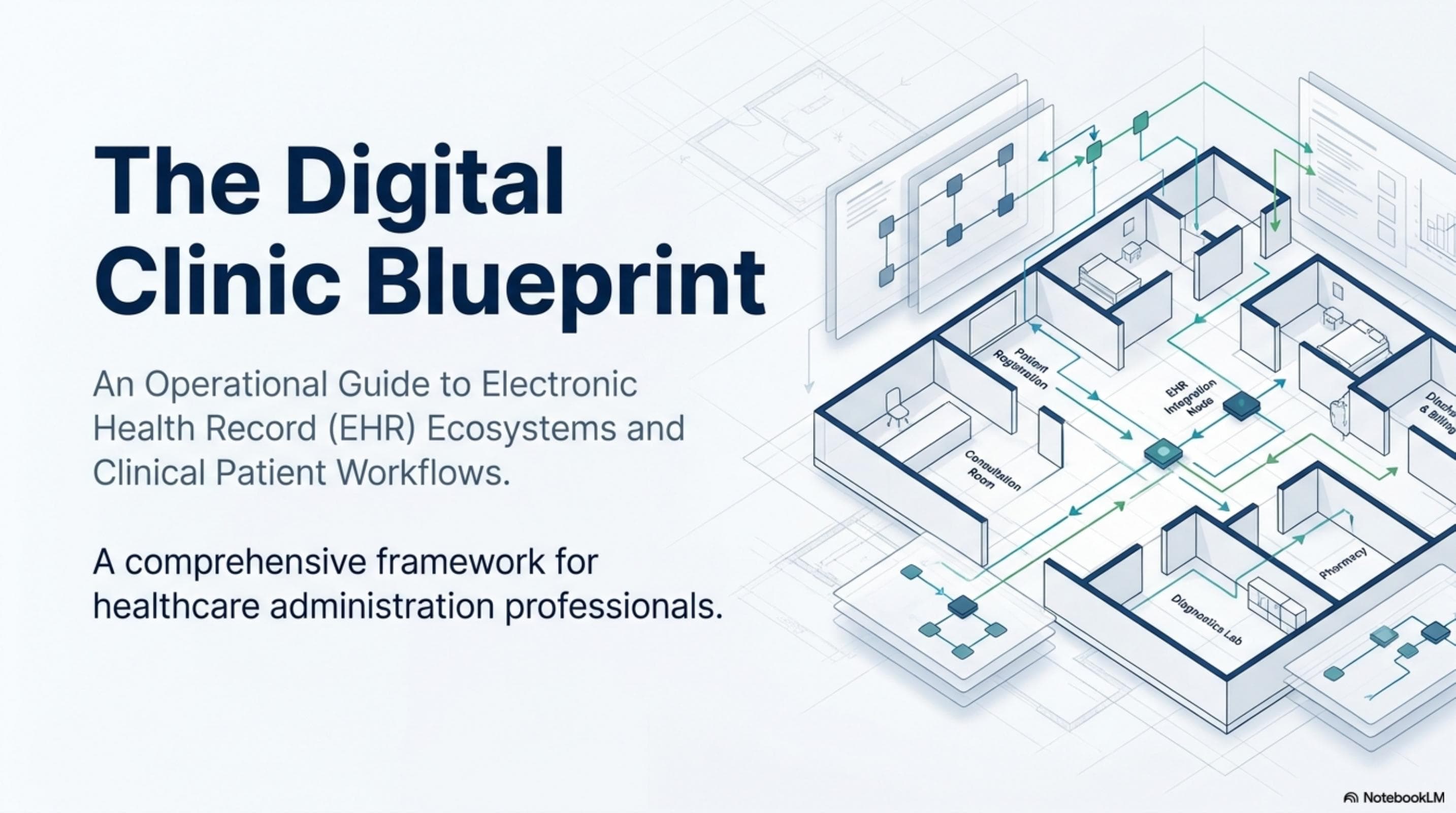
Lesson Notes
Read through the key concepts before you try the challenge.
What you are learning to do
You are beginning the Introduction to EHR course.
A patient arrives at a clinic. Over the next hour, roughly a dozen people touch information about that visit — the front desk, the medical assistant, the provider, the coder, the biller, the payer. Every one of them works from the same record. Your job is to make sure that record is accurate, complete, findable, and lawful.
Your task: Understand the whole system before learning any one part of it.
An electronic health record is the digital version of a patient's chart, but calling it that undersells what changed. A paper chart lived in one place and one person could use it at a time. An EHR is a database that many people use simultaneously, that enforces rules about who may see what, that records every access, and that feeds billing, quality reporting, and public health at the same time as clinical care.
That is why EHR work sits between clinical and administrative staff. You will not diagnose or treat. You will make sure that what was done is recorded correctly, coded correctly, protected correctly, and billed correctly — and those four things determine whether a practice can keep its doors open.
Key terms
- EHR
- Electronic Health Record — the comprehensive digital record of a patient's health across providers and encounters.
- EMR
- Electronic Medical Record — historically the record within one practice. The terms are now used almost interchangeably, but EHR implies sharing across organizations.
- PHI
- Protected Health Information — health information linked to an identifiable person. Governed by HIPAA.
- ePHI
- PHI in electronic form, which is what the HIPAA Security Rule specifically governs.
- Interoperability
- The ability of different systems to exchange information and use what they receive.
- Audit trail
- The automatic log of who accessed a record, when, and what they did. It is why unauthorized access is detectable.
| Zone | Who works there | What they put into the record |
|---|---|---|
| Front office | Reception, scheduling, registration | Demographics, insurance, eligibility, consent |
| Middle office | Medical assistants, nurses, providers | Vital signs, history, examination, orders, results, notes |
| Back office | Coders, billers, health information management | Codes, claims, payments, corrections, release of information |
What This Course Covers
This course introduces you to Electronic Health Records — the digital systems that power modern healthcare. Over nine weeks you will learn patient workflow, the healthcare revenue cycle, medical coding, legal compliance, and hands-on EHR simulation using EHR Go.
- Patient registration and scheduling workflows
- Healthcare revenue cycle from check-in to payment
- ICD, CPT, and HCPCS coding systems
- Legal and regulatory requirements for EHR use
- Hands-on simulation with EHR Go
Grading Breakdown
- Midterm Exam — 25%
- Final Exam — 25%
- Participation — 25%
- Homework & Lab Assignments — 25%
Challenge
Apply what you've learned in this lesson.
Which component accounts for 25% of your final grade?
Finished this lesson?
Progress is saved in this browser only. It is not a grade — official progress lives in Brightspace.